
Canada’s 7 Leading Medical Imaging Research Centres
Canada hosts a network of world-class medical imaging and biomedical research institutions that drive innovation in diagnostics, neuroscience, and translational medicine. These centres combine cutting-edge technology with cross-disciplinary collaboration, supporting both clinical and preclinical research across the country. The following are among the most recognized imaging research hubs in Canada:
- BIOMedical Translational Imaging Centre (BIOTIC) – Halifax, Nova Scotia
- Lawson Imaging Research Program – London, Ontario
- Robarts Research Institute – Translational Imaging / MRI Core Facility – London, Ontario
- Institute for Biodiagnostics (NRC-IBD) – Winnipeg, Manitoba
- UBC MRI Research Centre – Vancouver, British Columbia
- RI-MUHC Medical Imaging Platform – Montreal, Quebec
- Imaging Research Centre (IRC) at St. Joe’s – Hamilton, Ontario
Each of these organizations plays a key role in advancing biomedical imaging, clinical diagnostics, and technology development, helping position Canada as a global leader in health research and innovation. As technology continues to connect seemingly different industries, the innovations pioneered in Canada’s medical imaging sector are now finding parallels in other digital fields, including online gaming and casino platforms.
The Role of AI and Data Security in Both Health Research and Online Gaming

Advances in AI and data analytics used by medical imaging centres are also transforming the online casino industry. Both fields rely on secure data management, real-time analytics, and machine learning to interpret user patterns – whether in brain scans or player behaviour. In Canada, strict data privacy regulations under AGCO and federal laws ensure that both medical and gaming platforms protect users’ sensitive information with high-level encryption and ethical data handling standards. This shift is especially visible around new online casinos and how new brands are examined, where attention is placed on data ethics, behavioural safeguards, and user-level protections rather than surface-level features.
What this type of examination typically looks at:
- how player behaviour is monitored without intrusive profiling
- limits and pacing tools built into account settings
- transparency around data collection and retention
- availability of mental health and self-control support options
- differences in approach between newer operators and long-established ones
This growing overlap between innovation in health research and digital gaming highlights how technology developed for medical precision can also enhance user safety and experience in other industries. With that in mind, let’s take a closer look at some of Canada’s leading medical imaging research centres driving these advancements.
BIOMedical Translational Imaging Centre (BIOTIC)
The BIOMedical Translational Imaging Centre (BIOTIC), also known as the Biomedical Translational Imaging Centre, is a hospital-based biomedical research facility founded in 2013 in Halifax, Nova Scotia, and embedded within the IWK Health Centre and the QEII Health Sciences Centre. BIOTIC serves as a bridge between research and real-world healthcare, advancing diagnostic imaging through collaboration, innovation, and commercialization. Its mission – “Imaging for Life” – reflects its goal to move discoveries from the lab to clinical application. Supported by Brain Canada, BIOTIC and its growing community of biotics focus on turning new ideas into practical technologies that improve patient care and strengthen Canada’s med-tech sector.
Key Facts:
- Affiliations: IWK Health Centre, QEII Health Sciences Centre, Dalhousie University
- Industry: Medical Imaging Research & Equipment Development
- Research Areas: Discovery & Innovation; Medical Technology Development (MRI, MEG, EEG, TMS, PET/CT); Drug Discovery; Neuroscience & Neurotechnology; Commercialization Support
- Facilities: Over 12,000 sq. ft. of hospital-embedded labs with 306-sensor MEG, 0.5T–4T MRI scanners, EEG & TMS systems, preclinical PET/CT, and advanced analytics suites
- Strategic Role: Canada’s only hospital-based imaging lab with a commercialization mandate for brain science
- Business Contact: Denise Lalanne, Business Development Manager – +1 (902) 473-1856 | [email protected]
- Stay Updated: Follow IWK Pulse or read IWK Pulse from Home for the latest biomedical imaging breakthroughs from BIOTIC.
Lawson Imaging Research Program
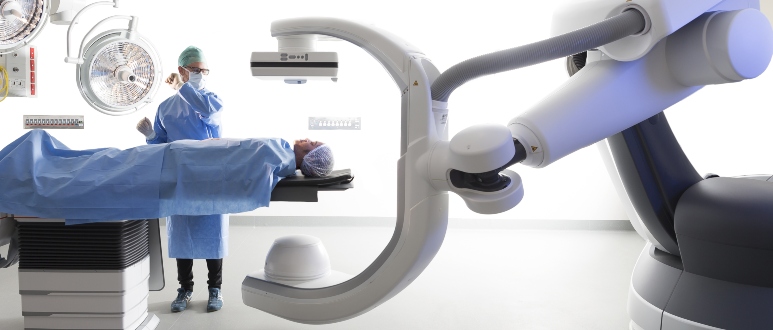
The Lawson Imaging Research Program at the Lawson Health Research Institute in London, Ontario, is one of Canada’s foremost centres for non-invasive biomedical imaging and hybrid technology development. Integrating PET/MR, PET/CT, and SPECT/CT research, Lawson advances diagnostics and treatment in oncology, cardiology, neurology, and metabolic diseases through a collaborative, translational approach that links laboratory discoveries directly to patient care. Its mission is to enhance human health by developing and applying next-generation imaging tools that uncover biological mechanisms and improve disease management.
Key Facts:
- Website: www.lawsonimaging.ca
- Location: 268 Grosvenor Street, London, Ontario, N6A 4V2
- Phone: +1 (519) 646-6100
- Affiliation: Lawson Health Research Institute / London Health Sciences Centre
- Research Areas: Oncology & Cardiology Imaging; Neurology & Mental Health; Metabolic & Cellular Imaging
- Technologies: PET/MR, PET/CT, SPECT/CT, Near-Infrared Spectroscopy (NIRS), Photoacoustic Tomography (PAT), Transcranial Magnetic Stimulation (TMS)
- Facilities: Hybrid imaging systems, in-house cyclotron and radiochemistry lab for PET tracer production
- Team Expertise: Multidisciplinary group of scientists, clinicians, and trainees focused on research, clinical trials, and commercialization
- Global Role: A world leader in biomedical imaging innovation, Lawson drives forward Canada’s leadership in medical imaging and translational research.
Robarts Research Institute – Translational Imaging / MRI Core Facility
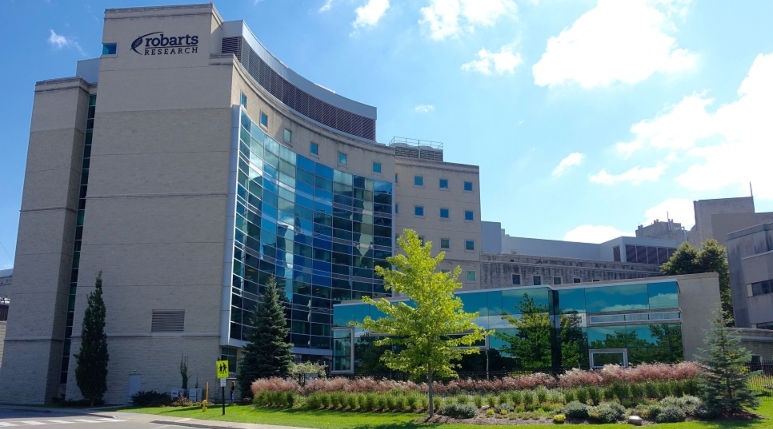
The Robarts Research Institute, part of the Schulich School of Medicine & Dentistry at Western University in London, Ontario, is one of Canada’s most advanced biomedical research centres, driving innovation in imaging, molecular medicine, and translational neuroscience. Known for its interdisciplinary approach, Robarts combines medical imaging, molecular biology, and computational neuroscience to improve understanding, diagnosis, and treatment of major diseases. A recent milestone includes the arrival of Canada’s most powerful 15.2 Tesla preclinical MRI scanner – one of only six in the world – enabling brain studies at unmatched resolution and advancing precision medicine research.
Key Facts:
- Website: www.robarts.ca
- Location: 1151 Richmond Street N., London, Ontario, N6A 5B7
- Phone: +1 (519) 931-5777
- Affiliation: Schulich School of Medicine & Dentistry, Western University
- Research Areas: Imaging, Molecular Medicine, Translational Neuroscience, Computational Neuroimaging
- Technologies: 15.2 Tesla MRI, advanced PET/MRI systems, molecular and cellular imaging platforms
- Programs: Daring to Ask research profiles, Taylor Prize for medical innovation, and Robarts Association of Trainees
- Leadership: Home to world-class scientists, including Dr. Ali Khan, Canada Research Chair in Computational Neuroimaging
- Community Engagement: Offers public science outreach through the Discover Robarts community series and Rapport magazine
- Contact: Prabhjot Sohal – Media Relations Officer | +1 (519) 857-4993 | [email protected]
Institute for Biodiagnostics (NRC-IBD)
The National Research Council Institute for Biodiagnostics (NRC-IBD) was a central Canadian research laboratory located in Winnipeg, Manitoba, focused on developing non-invasive medical diagnostic technologies. Established in 1992 by the National Research Council of Canada (NRC), it aimed to advance early disease detection, prevention, and treatment through innovations in biotechnology and medical imaging.
Key Facts:
- Established: 1992
- Location: 435 Ellice Avenue, Winnipeg, Manitoba, R3B 1Y6
- Operating Agency: National Research Council of Canada
- Staff: About 150 researchers and technicians
- Satellite Centres: Halifax, Nova Scotia, and Calgary, Alberta
- Research Areas:
– Cancer and cardiovascular disease research
– Neuroscience and MR technology development
– Medical photonics
– IT-based diagnostic and decision technologies - Economic Impact: Estimated at $30 million annually in Winnipeg (pre-closure)
UBC MRI Research Centre
The UBC MRI Research Centre, based at the University Of British Columbia (UBC) in Vancouver, is a leading Canadian facility dedicated exclusively to magnetic resonance (MR) imaging and spectroscopy research. Established through a Canadian Foundation for Innovation (CFI) grant, the centre provides state-of-the-art imaging resources to support studies in health and science. Equipped with a Philips 3.0 Tesla human MRI scanner and a Bruker 9.4 Tesla small-bore MRI scanner, the centre serves both human and preclinical research, operating on a cost-recovery basis to ensure broad access for investigators.
Key Facts:
- Website: mriresearch.med.ubc.ca
- Location: University of British Columbia, Vancouver, BC, Canada
- Facilities: Philips 3.0T MRI for human studies, Bruker 9.4T MRI for small-animal imaging, and advanced computing systems for image archiving and analysis
- Mandate: Provide cutting-edge in vivo MR imaging and spectroscopy to researchers at UBC, Vancouver teaching hospitals (UBC Hospital, Vancouver General Hospital, BC Children’s and Women’s Hospital, and St. Paul’s Hospital), and the broader scientific community
- Mission: To pursue and facilitate exemplary MR research that advances knowledge in science and health
- Core Values: Innovation, Collaboration, Respect, Integrity, and Exemplary Science
- Research Model: Investigator-driven projects supported by expert staff who assist in MR proposal planning and protocol design
RI-MUHC Medical Imaging Platform
The RI-MUHC Medical Imaging Platform at the Research Institute of the McGill University Health Centre (RI-MUHC) in Montreal, Quebec, provides advanced imaging infrastructure that supports both clinical and preclinical research. Combining human, molecular, and small-animal imaging technologies, the platform enables cutting-edge studies across neuroscience, oncology, cardiology, and nanotechnology. It brings together multiple specialized imaging facilities to accelerate innovation and translational research within McGill’s hospital network.
Key Facts:
- Website: rimuhc.ca
- Location: Research Institute of the McGill University Health Centre, Montreal, QC, Canada
- MGH MRI Research Platform: Siemens Prisma 3T scanner offering clinical and research MRI under a membership-based access model.
- Small Animal Imaging Labs (SAIL): Directed by Dr. Barry Bedell, focuses on non-invasive MRI, CT, PET, and SPECT imaging for disease models such as Alzheimer’s and Parkinson’s.
- Molecular Imaging Platform: Provides super-resolution imaging, nano flow cytometry, and analysis of nanoparticles and molecular processes.
- Related Facilities: Collaborates with the Immunophenotyping Platform and Proteomics and Molecular Analysis Platform for integrated biomedical research.
- Collaboration Areas: Nanotechnology, liquid biopsy, molecular diagnostics, and translational imaging.
Imaging Research Centre (IRC) at St. Joe’s
The Imaging Research Centre (IRC) at St. Joseph’s Healthcare Hamilton is a leading facility dedicated to advancing medical imaging research in Ontario. Operating under the Research Institute of St. Joe’s Hamilton, the IRC provides access to state-of-the-art imaging technologies for both basic science and clinical research. Equipped with a research-dedicated 3T MRI scanner and a PET/CT system used for clinical and investigative studies, the centre supports projects ranging from early discovery to human trials. Their expert staffs collaborate with scientists and clinicians across Hamilton and southern Ontario, making the IRC a central hub for imaging excellence.
Key Facts:
- Website: stjoes.ca/research
- Location: St. Joseph’s Healthcare Hamilton, Hamilton, Ontario, Canada
- Facilities: Research-dedicated 3T MRI; Clinical and Research PET/CT scanner
- Services: MRI and PET/CT project support, intake consultations, and pricing resources for academic and clinical researchers
- Contact: Norm Konyer – [email protected]
- Affiliation: The Research Institute of St. Joe’s Hamilton
- Research Strengths: Mental Health & Addiction, Lung & Chest, Kidney, Genitourinary Health, and Translational Imaging
- Annual Research Impact: Over $45 million in active research funding and 77,000 sq. ft. of dedicated research space
Disclaimer: This data is provided for informational and educational purposes only. We are not affiliated, partnered, or associated in any way with the medical imaging research centres mentioned above, including BIOTIC, Lawson Imaging, Robarts, NRC-IBD, UBC MRI, RI-MUHC, or St. Joe’s IRC. All details are presented solely to help readers become acquainted with Canada’s leading biomedical imaging institutions and their contributions to research and innovation.